Tree Care and Maintenance
Regular tree trimming and maintenance are essential for ensuring the safety, health, and longevity of trees while protecting surrounding property. By removing dead, diseased, or damaged branches, trimming reduces the risk of hazardous limbs falling during storms, prevents the spread of infection, and encourages healthy, balanced growth. Regular care also enhances landscape aesthetics, improves sunlight and air circulation, and boosts property value.
Safety and Damage Prevention: Routine maintenance eliminates hazardous branches that could fall on homes, power lines, or people, reducing liability and repair costs.
Tree Health and Longevity: Pruning removes infected or weak limbs, allowing the tree to allocate energy to healthy growth and preventing disease from spreading, ultimately extending its lifespan.
Improved Structure and Aesthetics: Trimming shapes the tree, promotes stronger structural integrity, and increases curb appeal.
Better Airflow and Light: Removing overgrown branches allows sunlight and air to reach inner branches and the grass below, encouraging a healthier overall landscape.
Pest Control: Proper trimming helps control pests by removing branches that could attract termites or other insects, which might otherwise invade the home.
Pruning services
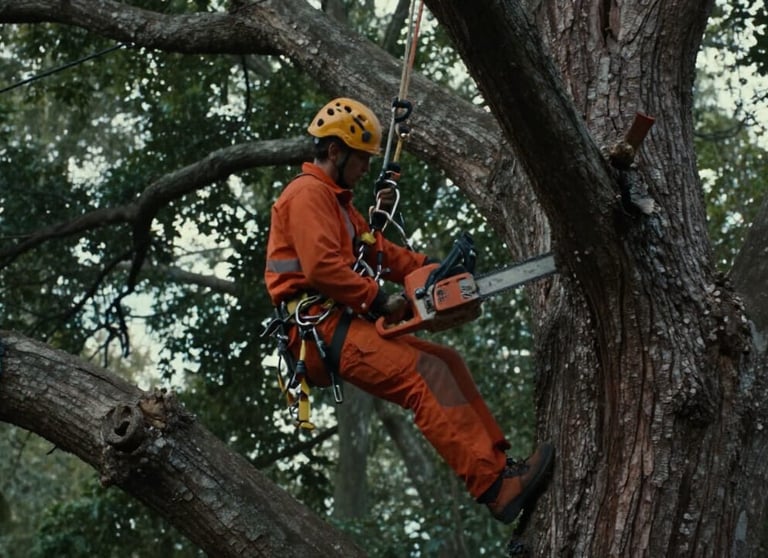
Pruning can include removing select live or dead branches to make space for foot or vehicle traffic, provide clearance from buildings, or improve specific viewing points. Many other unique reasons may warrant the removal of select branches to help achieve your landscape objectives.
Structural pruning is commonly performed on juvenile trees in order to orient the developing branches properly. This is important to improve the likelihood that your tree will have a healthy, well-balanced structure until it reaches maturity.
Crown cleaning is the controlled removal of dead or dying branches within a tree's canopy. This is commonly done to prevent targets below from being struck. The intensity of crown cleaning can be greatly reduced in some species of trees if proper crown thinning is conducted at regular intervals.
Canopy reduction is done to reduce the load applied to branches in wind events. This should be done only when necessary and with scrutiny. Excessive branch reduction can inhibit a tree's ability to photosynthesize and create the necessary energy for the tree.
Removals: Even though we are in the business of conserving trees, urban trees can pose a high risk in certain situations. St. Louis Tree Pros can safely remove your trees if it becomes a necessity. We use a creative approach that ensures we find the best options to stay safe and reduce impact on our surroundings. This necessity is what sets us above the rest because each tree provides its own unique challenges, and we love a good challenge.
All of St. Louis Tree Pros' pruning and removal practices comply with the International Society of Arboriculture's Best Management Practices and ANSI A300 standards.
Tree Preservations and Plant Health Care Services
Maintaining a healthy tree is the first step to fighting pests and diseases in the St. Louis area. If a tree is robust and well it does a great job of naturally defending itself without needing any extra help. Most tree health issues start under the ground. There are many different soil amendments and root development aids that can be tailored to each tree's specific needs. At St. Louis Tree Pros we look forward to learning about the challenges that your tree faces so we can provide a solution that will get your tree back on the healthy track.
Soil Amendment:
Soil needs to have an abundance of nutrient-holding capabilities for trees to thrive. This comes in the form of atmospheric nutrients as well as solid nutrients. Pore space in the soil is the key to providing the proper environment for both. Vertical mulching and airspade excavation are the most common methods we use to add porosity and nutrients to your soil.
Situations may arise when chemical applications are the best method for keeping trees healthy. We always use this as a last resort when creating solutions for tree preservation. This is why we choose only to use the most effective products that are also the least likely to have undesirable impacts on non-targeted components in our ecosystem.
Some products we use:
Paclobutrazol - a growth regulator that reduces canopy growth and increases root development
Emamectin Benzoate - prevents emerald ash borers and other insects from harming trees
Oxytetracycline hydrochloride - reduces the spread of bacterial pathogens in trees
Iron-nutrient injection for trees lacking iron
Mono- and di-potassium salts of phosphorous acid, some fungi and water mold pathogens
Thiabendazole hypophosphite - prevents infection of Dutch Elm Disease
Tree care and maintenance
FAQ's
Get answers to common questions about our expert tree services in the area.
Contact:
Caring for St. Louis trees since 2015
© 2026. All rights reserved.